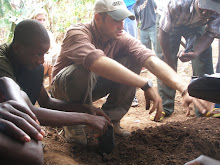
I was first introduced to Nyika national Park by a retired lawyer turned Peace Corps volunteer named Greg Dorr about a month into my Peace Corps service. Since then I have had many chances to continue exploring its Brachystegia covered lower slopes, towering escarpment, ancient forests and vast plateau. There’s plenty of room to explore this park, Nyika is Malawi’s biggest national Park stretching across 1210 square miles. Despite being Malawi’s oldest designated national park few people visit Nyika compared to other parks like Liwonde or Majete. I see it as sort of a forgotten park neglected by the government which leaves it open to poaching and destruction from the people living around the plateau stripping its escarpment for firewood. Nyika is a very important ecological niche to the whole Northern region, it is the primary watershed for both Rumphi and Karonga. Aside from being a very important place nyika. Aside from being very important it is also a spectacularly beautiful place, but few people living around it realize it, because they have seen so little of it. For this reason Me and two other volunteers living near Nyika Pace Phillips and Matt Fornoff have organized a wildlife and environment mini-camp for young people living in Rumphi and Karonga.
The camp is called "The Rumphi and Karonga Wildlife and Environment Extravaganza" (I came up with that catchy title all by myself!), and it is intended to provide students with a broader understanding of the value of Nyika, and skills to benefit from Nyika's resources without destroying them.be five days long at the Nchena chena research station which lies at the base of the escarpment. We are inviting student leaders from secondary school wildlife clubs from all around Nyika. We will be teaching sessions on bee-keeping (how to build and manage a hive), soap making, mushroom growing, Jam making, fish farming and plenty of other useful skills, but the highlight of the camp will be a hike up onto Nyika Plateau to see Nchena chena falls and the Juniper forest.
This camp is being completely funded by the Peace Corps Partners Program, which means anybody can donate to it, which is why I am looking back through my journal entries from all of my adventures in Nyika, and typing up blogs for every trip I have taken to Nyika. I'm calling these next few blogs The Nyika Chronicles, I hope these adventures in Nyika might give you all a better idea of what a special place Nyika is, and if any of you want to donate to our camp you can find it on the Peace Corps website www.peacecorps.gov.
Thanks,
Dan
Wednesday, September 24, 2008

Garden Sanctuary
I think one of the biggest legacies that will come from my service in Mwazisi is the little seed packets that my family and friends send in their letters and packages. Having new and different vegetables available in Mwazisi will have a significant effect on the overall nutrition of the people living in Mwazisi. Being organic seeds they also provide the gardeners of Mwazisi with a reliable reproducing seed base as opposed to the hybrid seeds that are spread all across Africa, by seed corporations like Monsanto. Most of all having these seeds has given me the opportunity to demonstrate simple sustainable gardening techniques like mulching and composting which, slowly by slowly, seem to be utilized by an increasing number of my fellow gardeners in the dambo (river valley). The world is headed into a global food crisis, but it will be particularly hard hitting in Malawi where an erratic rainy season last year devastated the south and central regions harvest and a focus on tobacco farming in the north. So I'd say one of the best things I can do for people in Mwazisi is hand them a pack of seeds.
I have already seen the diversification of Mwazisi's diet improve tremendously in the past year. When I first arrived the only vegetables growing in anybodies garden were rape, mustard greens, cabbage, tomatoes and onions. Not only does it seem they just plant these few vegetables, but these are also the only vegetables aside from wild amaranth and pumpkin greens that people know how to prepare. But since I started giving out different seeds I see scatterings of carrots, spinach, and romaine lettuce mixed into the gardens, and I'd like to imagine that's getting eaten.
At first most of the people that I gave seeds to weren't planting them. I think people asked for the seeds simply for the novelty of taking something new and different from the azungu. Maybe they were intimidated to actually plant them feeling like they wouldn't know what to do with the strange plants if they actually germinated. So I stopped just handing them out and started using them in demonstration gardens at both the secondary and primary schools. These gardens had a whole slew of problems, From the bore-hole drying up to goats breaking through our weak fence , and going to town on anything green, to the students just plain forgetting to water the garden for a week or more while I was away at trainings or trips to Lilongwe. But these first gardens were useful because they were the villages first introduction to the strange new vegetables. The students got to see them raised from seed to harvest, and they saw little things like a pepper plant is grown the same way you grow a tomato plant, or that you don't transplant carrots.
The students also were the first to taste the vegetables as well. As the carrots started to pop up I pulled and skinned them there and gave everybody a taste of raw carrots. They must have thought I was trying to kill them, as they slowly chewed the strange food with nervous smiles on their face looking to their friends for reassurance, only to have their friends watching them intently to see if at any moment they keel over and die. After getting their nod of approval I pulled up enough carrots for everybody and told them to slice up the carrots and mix them with any greens that they might be cooking. Soon students were coming up to me asking for carrot seed instead of the usual tomato and onion request. The vegetable sampling had a domino effect, as students carried home bundles of swiss chard, beet greens, and spinach, I had more and more people coming up to me to ask about what they had tasted and how they could get some more.
Another benefit of those first gardens was that it was a great opportunity for seed multiplication. I was amazed that despite the common complaint about the high price of seeds nobody seemed to be collecting their seeds after the vegetables were finished. So when our garden started to shoot flowers, we let them all go to seed, and I used it as an opportunity to teach my wildlife club about seed saving, as a result we collected a fair amount of spinach, and arugula seed, and bags of romaine lettuce seed. The students were excited to see how much seed could be collected from just a few plants, and I hope that they will continue saving their seeds so that the packets I hand out during my service will be supplying the gardens of Mwazisi for years to come.
This year I've done all of my gardening down in the dambo instead of dealing with the goats and lack of water in the village. It's a short walk from my house, and being a bit outside of village has made it into my quiet sanctuary at the end of the day. The brush surrounding the river is always alive with the sounds of birds and crickets as the sun begins to slide behind the mountains in Vwaza, and the nights first stars begin to appear overhead. These last few months things have become more hectic for me; I feel like I'm running back and forth between teaching, my tree nurseries, and the EPA project. So I think the couple of hours of quiet work in the garden every afternoon have maintained my sanity.
Another benefit of keeping the garden in the dambo is that my plot is together with the most serious gardeners in Mwazisi, so we are always learning from each other, and I know that any seeds I share with them will be put to good use. For example Mr. Mkandawire is a man in his sixties who keeps about a quarter of an acre next to my plot where he spends over three hours a day moving from plant to plant with two broken watering cans. He greets me with a warm smile every afternoon and we always share what we harvest that day. I also shared a lot of seeds with him early on, so now mixed in with his many cabbage and tomato plants, there is a whole section of butter crunch lettuce beds, the occasional bush bean plant, and even a few broccoli flowers. He showed me how to dig out a well when the water level of the river dropped, and I showed him that beet roots and cabbages make great companion plants. I was especially happy when I saw him mimicking the heavy mulching I put on my beds, the day after I explained that I do that so that I don't have to water my garden so often. I have introduced him to many vegetables that he has never tasted before, as I always send him home with instructions of how his wife should prepare the veggie of the day. He comes back with plans for next year to grow whatever vegetable I give him, and judging from what I've seen him do in his garden so far, I would never doubt that he could live up to his most ambitious plans.
I have already seen the diversification of Mwazisi's diet improve tremendously in the past year. When I first arrived the only vegetables growing in anybodies garden were rape, mustard greens, cabbage, tomatoes and onions. Not only does it seem they just plant these few vegetables, but these are also the only vegetables aside from wild amaranth and pumpkin greens that people know how to prepare. But since I started giving out different seeds I see scatterings of carrots, spinach, and romaine lettuce mixed into the gardens, and I'd like to imagine that's getting eaten.
At first most of the people that I gave seeds to weren't planting them. I think people asked for the seeds simply for the novelty of taking something new and different from the azungu. Maybe they were intimidated to actually plant them feeling like they wouldn't know what to do with the strange plants if they actually germinated. So I stopped just handing them out and started using them in demonstration gardens at both the secondary and primary schools. These gardens had a whole slew of problems, From the bore-hole drying up to goats breaking through our weak fence , and going to town on anything green, to the students just plain forgetting to water the garden for a week or more while I was away at trainings or trips to Lilongwe. But these first gardens were useful because they were the villages first introduction to the strange new vegetables. The students got to see them raised from seed to harvest, and they saw little things like a pepper plant is grown the same way you grow a tomato plant, or that you don't transplant carrots.
The students also were the first to taste the vegetables as well. As the carrots started to pop up I pulled and skinned them there and gave everybody a taste of raw carrots. They must have thought I was trying to kill them, as they slowly chewed the strange food with nervous smiles on their face looking to their friends for reassurance, only to have their friends watching them intently to see if at any moment they keel over and die. After getting their nod of approval I pulled up enough carrots for everybody and told them to slice up the carrots and mix them with any greens that they might be cooking. Soon students were coming up to me asking for carrot seed instead of the usual tomato and onion request. The vegetable sampling had a domino effect, as students carried home bundles of swiss chard, beet greens, and spinach, I had more and more people coming up to me to ask about what they had tasted and how they could get some more.
Another benefit of those first gardens was that it was a great opportunity for seed multiplication. I was amazed that despite the common complaint about the high price of seeds nobody seemed to be collecting their seeds after the vegetables were finished. So when our garden started to shoot flowers, we let them all go to seed, and I used it as an opportunity to teach my wildlife club about seed saving, as a result we collected a fair amount of spinach, and arugula seed, and bags of romaine lettuce seed. The students were excited to see how much seed could be collected from just a few plants, and I hope that they will continue saving their seeds so that the packets I hand out during my service will be supplying the gardens of Mwazisi for years to come.
This year I've done all of my gardening down in the dambo instead of dealing with the goats and lack of water in the village. It's a short walk from my house, and being a bit outside of village has made it into my quiet sanctuary at the end of the day. The brush surrounding the river is always alive with the sounds of birds and crickets as the sun begins to slide behind the mountains in Vwaza, and the nights first stars begin to appear overhead. These last few months things have become more hectic for me; I feel like I'm running back and forth between teaching, my tree nurseries, and the EPA project. So I think the couple of hours of quiet work in the garden every afternoon have maintained my sanity.
Another benefit of keeping the garden in the dambo is that my plot is together with the most serious gardeners in Mwazisi, so we are always learning from each other, and I know that any seeds I share with them will be put to good use. For example Mr. Mkandawire is a man in his sixties who keeps about a quarter of an acre next to my plot where he spends over three hours a day moving from plant to plant with two broken watering cans. He greets me with a warm smile every afternoon and we always share what we harvest that day. I also shared a lot of seeds with him early on, so now mixed in with his many cabbage and tomato plants, there is a whole section of butter crunch lettuce beds, the occasional bush bean plant, and even a few broccoli flowers. He showed me how to dig out a well when the water level of the river dropped, and I showed him that beet roots and cabbages make great companion plants. I was especially happy when I saw him mimicking the heavy mulching I put on my beds, the day after I explained that I do that so that I don't have to water my garden so often. I have introduced him to many vegetables that he has never tasted before, as I always send him home with instructions of how his wife should prepare the veggie of the day. He comes back with plans for next year to grow whatever vegetable I give him, and judging from what I've seen him do in his garden so far, I would never doubt that he could live up to his most ambitious plans.
Monday, August 4, 2008
Ramblings: A Ginger, peanuts, soil blocks, and a crazed elephant
I’m sorry if I’ve fallen out of touch with everybody the last couple months, but it has been the busiest I’ve been since coming to Mwazisi, and I also had Corie (see the Ginger Blog) staying with me for the past month. She was an incredible springboard for all of my projects, and thanks to her help I don’t feel like everything is about to fall apart, which is usually the case. But of course much of my attention was spoken for while she was here, so I’m sorry if I’ve slipped out of touch.
The Agriculture EPA office project is in full swing now, even though the money hasn’t come in just yet, at least I know that it has been approved and is going to get funded. So in the mean time while we wait for the funding all four committees have started doing what they can. The building committee has started meeting in the mornings and digging soil for stabilized soil blocks, with the help of the Gam United football club (see Meathead football player blog) which I have been bribing with 36 pairs of football boots that were generously donated by my wonderful friend Catherine Yirisari who used to work for the US Men’s Soccer team. The guys are so excited for the boots, since most of them usually play bare foot, and their enthusiasm has carried the work much faster than I thought. We have already dug over 1000 wheel barrows of soil from a termite hill near the site of the office. The machine for pressing the blocks, is actually still in Mzuzu, Where I’m working with an extraordinary Malawian engineer named Louis Chinula who is modifying the top and bottom plates in the machine so that the blocks will be interlocking and won’t need cement for mortor.
The tree nurseries committee is led by three strong tree nurseries in Chitanga where they built fences, shades, air pruning benches. We filled hundreds of tubes at each nursery, so we already started sowing fruit seeds like orange, papaya, and Masow, as well as good agro forestry trees like Faidabiera Albedia, and Sienna Spectabilus. I have also been working with a bigger tree nursery in Kwasamesenga that has a lot more people technically working on the project, but I think because of the number of people working on the nursery nobody is really stepping up to invest themselves in the nursery the way the leaders in Chitanga have. In Kwasamesenga lots of people show up chat a bunch and start complaining that it’s tea time as soon as we start working, but we have also managed to get a big jump on the work there, and its going to be a big tree nursery, close to 10,000 trees.
The income generating activities committee is getting started with a groundnut (peanut) sheller that I made at Mid-service training in Dedza. The executive committee chairman Cuthbert Kachali built a strong stand for the machine so that it can be easily used by everybody. As I put all of my weight on the stand to test out its strength he stood over me with a proud smile on his face and simply said “joinery” as an explanation for the good work that he had done. Two weeks ago we set up the concrete machine in a small room next to Nya Bota’s grocery. It’s a simple concrete machine with a rotor that hangs between the rough cement walls of the machine and leaves a small space where the groundnuts fall and get crushed as someone turns the machine. We have only started using the machine, testing it with the groundnuts that I was given by my neighbors. Once we get the process down with very little breakage of the nuts we are planning to start charging the farmers 100 Malawian Kwatcha (less than 1 dollar) to shell a 100 kg bag of nuts. Everybody in my area grows groundnuts, so this could be a good business for the project to generate money for future ventures like an oil press or a juicer. The idea behind this income generation committee is to add value to crops that are already commonly grown in the area by using simple and fast processors. The groundnut sheller is a great example; an unshelled groundnut is essentially worthless, while shelled nuts can be sold for over 100 kwatcha per kg. But shelling groundnuts is a long and cumbersome job, a 100 kg bag would take a family of five a few days of cracking. But with the machine two people can do a 100 kg bag in less than 1 hour.
The fourth committee is the fishponds committee which has only started clearing the area where we are planning to make community fishponds, and now we are stuck waiting for the Rumphi director of fishponds to come and approve of the area, which may never happen.
The rest of my time is occupied at the secondary school getting the Form 2 students ready for this falls Junior Certificate Exams. Actually, these last few months the secondary school wildlife club has been the biggest cause of my headaches, since my fellow patron teacher keeps making unrealistic promises of trips to the students without first organizing transport or any of the necessary details, so I end up running around begging greedy drivers for a decent price and riding my bike to cell phone network to organize.
So finally last week my headaches paid off and the entire club went to Vwaza Game Reserve for an adventurous day trip that included lots of elephants, hippos, baboons, warthogs, impala, and one crocodile. The highlight of the day came when a massive bull elephant charged the truck we were all riding in and the driver had to floor it to escape from the elephant clearing all 40 students out of the truck with his massive tusks. That could have been something great to explain on my Peace Corps description of service.
So that’s what I’ve been up to the last couple months, there’s about a million little adventures, struggles, triumphs , and defeats mixed in there, that I don’t have time to explain in better detail, and I’m sure you all don’t have time to read, but just know that everyday is a rollercoaster ride, with all sorts of huge ups and downs. Every now and then I encounter something that completely throws me through a loop, but by the end of the day when I’m writing in my journal by a candle, no matter how many things went wrong or how many different people I felt like strangling, I’m still glad that I got on the ride to begin with, it’s always worth it.
The Agriculture EPA office project is in full swing now, even though the money hasn’t come in just yet, at least I know that it has been approved and is going to get funded. So in the mean time while we wait for the funding all four committees have started doing what they can. The building committee has started meeting in the mornings and digging soil for stabilized soil blocks, with the help of the Gam United football club (see Meathead football player blog) which I have been bribing with 36 pairs of football boots that were generously donated by my wonderful friend Catherine Yirisari who used to work for the US Men’s Soccer team. The guys are so excited for the boots, since most of them usually play bare foot, and their enthusiasm has carried the work much faster than I thought. We have already dug over 1000 wheel barrows of soil from a termite hill near the site of the office. The machine for pressing the blocks, is actually still in Mzuzu, Where I’m working with an extraordinary Malawian engineer named Louis Chinula who is modifying the top and bottom plates in the machine so that the blocks will be interlocking and won’t need cement for mortor.
The tree nurseries committee is led by three strong tree nurseries in Chitanga where they built fences, shades, air pruning benches. We filled hundreds of tubes at each nursery, so we already started sowing fruit seeds like orange, papaya, and Masow, as well as good agro forestry trees like Faidabiera Albedia, and Sienna Spectabilus. I have also been working with a bigger tree nursery in Kwasamesenga that has a lot more people technically working on the project, but I think because of the number of people working on the nursery nobody is really stepping up to invest themselves in the nursery the way the leaders in Chitanga have. In Kwasamesenga lots of people show up chat a bunch and start complaining that it’s tea time as soon as we start working, but we have also managed to get a big jump on the work there, and its going to be a big tree nursery, close to 10,000 trees.
The income generating activities committee is getting started with a groundnut (peanut) sheller that I made at Mid-service training in Dedza. The executive committee chairman Cuthbert Kachali built a strong stand for the machine so that it can be easily used by everybody. As I put all of my weight on the stand to test out its strength he stood over me with a proud smile on his face and simply said “joinery” as an explanation for the good work that he had done. Two weeks ago we set up the concrete machine in a small room next to Nya Bota’s grocery. It’s a simple concrete machine with a rotor that hangs between the rough cement walls of the machine and leaves a small space where the groundnuts fall and get crushed as someone turns the machine. We have only started using the machine, testing it with the groundnuts that I was given by my neighbors. Once we get the process down with very little breakage of the nuts we are planning to start charging the farmers 100 Malawian Kwatcha (less than 1 dollar) to shell a 100 kg bag of nuts. Everybody in my area grows groundnuts, so this could be a good business for the project to generate money for future ventures like an oil press or a juicer. The idea behind this income generation committee is to add value to crops that are already commonly grown in the area by using simple and fast processors. The groundnut sheller is a great example; an unshelled groundnut is essentially worthless, while shelled nuts can be sold for over 100 kwatcha per kg. But shelling groundnuts is a long and cumbersome job, a 100 kg bag would take a family of five a few days of cracking. But with the machine two people can do a 100 kg bag in less than 1 hour.
The fourth committee is the fishponds committee which has only started clearing the area where we are planning to make community fishponds, and now we are stuck waiting for the Rumphi director of fishponds to come and approve of the area, which may never happen.
The rest of my time is occupied at the secondary school getting the Form 2 students ready for this falls Junior Certificate Exams. Actually, these last few months the secondary school wildlife club has been the biggest cause of my headaches, since my fellow patron teacher keeps making unrealistic promises of trips to the students without first organizing transport or any of the necessary details, so I end up running around begging greedy drivers for a decent price and riding my bike to cell phone network to organize.
So finally last week my headaches paid off and the entire club went to Vwaza Game Reserve for an adventurous day trip that included lots of elephants, hippos, baboons, warthogs, impala, and one crocodile. The highlight of the day came when a massive bull elephant charged the truck we were all riding in and the driver had to floor it to escape from the elephant clearing all 40 students out of the truck with his massive tusks. That could have been something great to explain on my Peace Corps description of service.
So that’s what I’ve been up to the last couple months, there’s about a million little adventures, struggles, triumphs , and defeats mixed in there, that I don’t have time to explain in better detail, and I’m sure you all don’t have time to read, but just know that everyday is a rollercoaster ride, with all sorts of huge ups and downs. Every now and then I encounter something that completely throws me through a loop, but by the end of the day when I’m writing in my journal by a candle, no matter how many things went wrong or how many different people I felt like strangling, I’m still glad that I got on the ride to begin with, it’s always worth it.
Saturday, August 2, 2008
Mike and Duch's Chitipa adventure
Here's a story I stole from my buddy Mike Hardesty a Finished Peace Corps volunteer who is still in Malawi working on the Clinton Hunter project. I thought it was a classic Peace Corps story, and deserved a bit of public access. Believe it or not this came from Mike's Description of Service Report. I'm planing on heading to Chitipa to see if I can find the fabeled Ronoldi.
This year, I, alone with Duch Routt, were able to successfully deliver and out-plant roughly 1,300 bananas in the month of December around the 22nd. It however did not happen without incident. As part of the original budget for the Banana Orchard Establishment Project, the Chitipa ADD had agreed to provide transport for the banana seedlings which were raised in local nurseries around the district. One month before the tentatively scheduled out-planting date, it was discovered that the ADD was not going to be able to keep their word. Duch and I were forced to negotiate a privately hired vehicle that would be supervised by ourselves. Logistically the task was very challenging. Only having enough money for a one day hire, Duch and I were forced to be innovative in how to pick up 6 improved banana varieties totaling 1,300 bananas from 3 separate nurseries and redistribute them proportionally over 6 orchard sites in a vehicle that could only hold around 750 seedlings at one time. After a morning of collecting and delivering with many temporary drop points in between, we headed for our third, and arguably are most difficult, orchard to access in the hills of Misuku Traditional Authority. At about three quarters of our way in to the hills we had an accident because the driver failed to shift properly on a steep incline and lost control of the vehicle. The driver responded quickly, and before we could gain enough speed to go completely out of control, he cut the wheel at the right angle so as not to flip, but so that we would slam into the side of the hill and stop ourselves about 20 ft after we started drifting backwards. Fortunately no one was hurt, although we were all shookin’ up and some of us were weeping, namely Duch. The vehicle on the other hand, was completely jacked up on the hill and was not able to move, in part because the wheels were off the ground, but mostly because the batteries for the vehicle were dead and the 7 toner could only be started by pushing. This last discovery was deflating to say the least, and frustrating for others (Duch) who claimed to despise the consistent deception that prohibits effective development in the area. “Why would we ever hire a vehicle with dead batteries?” he said with a sigh to no one, kicking a stone in the dirt.
Our initial idea was to phone the boma and get the brother of the driver—and the one we had hired the vehicle from—to come on his motor bike with two new batteries so that we could simply start the motor and drive away. Due to reasons that we still don’t completely understand, the promises of new batteries “imminently” coming were never fulfilled that day and we stayed that night in the bush. For about 4 hours leading up to darkness we dug around the vehicle, which was all rock of course, and entertained other ideas of escape. Then the rains came with the wrath of the almighty and we were forced to retire for the evening. Duch and I stayed with the orchard manager to whom we were delivering bananas, Mr Chilali, and enjoyed a relaxing evening nibbling on dried fish around the warmth of campfire recounting the day’s trying events.
In the morning we rose early to the inviting smell of boiling maize flower. After dining and, with full bellies, we went back to the site of the accident to wake the driver and his lackey so that we could begin again waiting for the batteries not to arrive. To this day, and regardless of what you might think after what I tell you next, I do not claim to be a soothsayer. But sitting their in Bukanaga Village contemplating my contempt for incompetence, I confessed to Duch my sneaking suspicion that the batteries just might not come. And they never did.
In the wake of this epiphany and Duch’s uncontrollable sobbing, came a miracle. A miracle by the name of Ronoladi. A true Mundali tribesman of the Misuku hills, Ronaldi heard of our troubles and came—probably from far away--to help purely out of the kindness of his heart (or because he heard we were white men and wanted money). Regardless, he arrived in good time and in good humor with a radiant smile that rivaled daffodils in its ability to warm the heart. Standing at 3-4 ft taller than everyone else, Ronoldi was a behemoth of a man. With only his bare hands and a small, well-used hoe, he immediately set about liberating our vehicle from the granite teeth which had captured it the night before. Watching Ronoldi, our world slowed in to a humbling awe. It was an awe that one might only experience witnessing a miracle or watching ice skating. And as he worked in seemingly effortless motions, the earth moved. Other locals, inspired by Ronoldi’s seemingly unceasing power and jubilance, attempted to keep pace with the Mammoth from Misuku, but soon collapsed in failure and lay exhausted at his feet, only offering moans of encouragement mixed with that of fear
for the unknown.
Hours passed like minutes and Ronaldi continued to work. Clouds drifted over head and Ronaldi continued to work. Small insect-like creatures danced around my bosom and Ronoldi continued to work. By mid day, a new light of possibility shown down upon our cloudy hearts. Then Duch, removing the crusted residual mucus from around his nose and mouth--a pathetic result from hours of weeping--looked at me and said, “We might just make it out this thing yet.”
And indeed we did. A full 24 hrs after the accident, Ronaldi had broken enough stone, displaced enough matter, and shifted enough soil so that we--but mostly Ronaldi--could lift the 7 toner inch by inch away from the hill so that it could drift freely backwards—with the breaks this time—and be push-started on a flat surface some 200 yards down the hill.
By 6 o’clock that night we had finished to deliver the bananas to the third orchard man, Mr. Chilali of Misuku and were quickly on our way to the remaining beneficiaries. By 7 o’clock the full moon had shown its cratered, albeit predictable, face. And as we sat there and marveled at its luminescence, we also sat there and wondered why the driver had not turned on the lights to the vehicle. The simple, and potentially devastating answer, “The headlights don’t work. We will have to stop for the night,” deterred me not. “Did Ronaldi ‘stop for the night?’ I replied. (Duch had started weeping again). “Did Ronaldi waver in the face of impossibilities?’ We’ve got the light of the moon my reluctant friend. Fear not, and let us push forward. Those families will have their seedlings before Christmas, this I swear!”
The driver yawned, but did not stop. He did not stop after the 4th orchard drop off. “Better late then never we yelled with Christmas cheer to the white smiles as we departed.” And he did not stop after the 5th orchard drop off. He did not stop the rest of the journey, until the drive shaft to the 7 ton piece of sh*t fell to the ground traveling at 30 km/hr somewhere in Northern Chitipa around mid-night.
So there we were, tired, smelly, exhausted and stinky. But we had no choice. We had no choice but to fix this rotten, over used 7 toner from hell, because we had only 100 bananas left to deliver to the final beneficiary. With Duch demoralized and weeping himself to sleep in the front of the cab, I, along with the driver and his lackey tied the drive shaft back to the vehicle with bark from local trees and some small pieces of nylon rope. It was temporary; I can’t dispute you on that. It could have failed; I am not hiding that. It was desperate; I know desperation. But we finished our delivery, without incident, without tribulation, and puttered back into town at 2:00 Christmas Eve morning, the drive shaft hanging by a thread.
That night in Chitipa Boma, lying next to Duch in a single room in a run down guest house with unwashed sheets from yester year, I realized we had accomplished something. We had succeeded. Despite all odds and Duch’s incessant weeping, we had rallied and triumphed. I realized that in a mean world where incompetent men wield undeserved power……..
And then a deep darkness washed over me and I drifted into an undisturbed slumber, remembering only Ronaldi’s unrelenting smile…..and Duch, with snot all over his face.
This year, I, alone with Duch Routt, were able to successfully deliver and out-plant roughly 1,300 bananas in the month of December around the 22nd. It however did not happen without incident. As part of the original budget for the Banana Orchard Establishment Project, the Chitipa ADD had agreed to provide transport for the banana seedlings which were raised in local nurseries around the district. One month before the tentatively scheduled out-planting date, it was discovered that the ADD was not going to be able to keep their word. Duch and I were forced to negotiate a privately hired vehicle that would be supervised by ourselves. Logistically the task was very challenging. Only having enough money for a one day hire, Duch and I were forced to be innovative in how to pick up 6 improved banana varieties totaling 1,300 bananas from 3 separate nurseries and redistribute them proportionally over 6 orchard sites in a vehicle that could only hold around 750 seedlings at one time. After a morning of collecting and delivering with many temporary drop points in between, we headed for our third, and arguably are most difficult, orchard to access in the hills of Misuku Traditional Authority. At about three quarters of our way in to the hills we had an accident because the driver failed to shift properly on a steep incline and lost control of the vehicle. The driver responded quickly, and before we could gain enough speed to go completely out of control, he cut the wheel at the right angle so as not to flip, but so that we would slam into the side of the hill and stop ourselves about 20 ft after we started drifting backwards. Fortunately no one was hurt, although we were all shookin’ up and some of us were weeping, namely Duch. The vehicle on the other hand, was completely jacked up on the hill and was not able to move, in part because the wheels were off the ground, but mostly because the batteries for the vehicle were dead and the 7 toner could only be started by pushing. This last discovery was deflating to say the least, and frustrating for others (Duch) who claimed to despise the consistent deception that prohibits effective development in the area. “Why would we ever hire a vehicle with dead batteries?” he said with a sigh to no one, kicking a stone in the dirt.
Our initial idea was to phone the boma and get the brother of the driver—and the one we had hired the vehicle from—to come on his motor bike with two new batteries so that we could simply start the motor and drive away. Due to reasons that we still don’t completely understand, the promises of new batteries “imminently” coming were never fulfilled that day and we stayed that night in the bush. For about 4 hours leading up to darkness we dug around the vehicle, which was all rock of course, and entertained other ideas of escape. Then the rains came with the wrath of the almighty and we were forced to retire for the evening. Duch and I stayed with the orchard manager to whom we were delivering bananas, Mr Chilali, and enjoyed a relaxing evening nibbling on dried fish around the warmth of campfire recounting the day’s trying events.
In the morning we rose early to the inviting smell of boiling maize flower. After dining and, with full bellies, we went back to the site of the accident to wake the driver and his lackey so that we could begin again waiting for the batteries not to arrive. To this day, and regardless of what you might think after what I tell you next, I do not claim to be a soothsayer. But sitting their in Bukanaga Village contemplating my contempt for incompetence, I confessed to Duch my sneaking suspicion that the batteries just might not come. And they never did.
In the wake of this epiphany and Duch’s uncontrollable sobbing, came a miracle. A miracle by the name of Ronoladi. A true Mundali tribesman of the Misuku hills, Ronaldi heard of our troubles and came—probably from far away--to help purely out of the kindness of his heart (or because he heard we were white men and wanted money). Regardless, he arrived in good time and in good humor with a radiant smile that rivaled daffodils in its ability to warm the heart. Standing at 3-4 ft taller than everyone else, Ronoldi was a behemoth of a man. With only his bare hands and a small, well-used hoe, he immediately set about liberating our vehicle from the granite teeth which had captured it the night before. Watching Ronoldi, our world slowed in to a humbling awe. It was an awe that one might only experience witnessing a miracle or watching ice skating. And as he worked in seemingly effortless motions, the earth moved. Other locals, inspired by Ronoldi’s seemingly unceasing power and jubilance, attempted to keep pace with the Mammoth from Misuku, but soon collapsed in failure and lay exhausted at his feet, only offering moans of encouragement mixed with that of fear
for the unknown.
Hours passed like minutes and Ronaldi continued to work. Clouds drifted over head and Ronaldi continued to work. Small insect-like creatures danced around my bosom and Ronoldi continued to work. By mid day, a new light of possibility shown down upon our cloudy hearts. Then Duch, removing the crusted residual mucus from around his nose and mouth--a pathetic result from hours of weeping--looked at me and said, “We might just make it out this thing yet.”
And indeed we did. A full 24 hrs after the accident, Ronaldi had broken enough stone, displaced enough matter, and shifted enough soil so that we--but mostly Ronaldi--could lift the 7 toner inch by inch away from the hill so that it could drift freely backwards—with the breaks this time—and be push-started on a flat surface some 200 yards down the hill.
By 6 o’clock that night we had finished to deliver the bananas to the third orchard man, Mr. Chilali of Misuku and were quickly on our way to the remaining beneficiaries. By 7 o’clock the full moon had shown its cratered, albeit predictable, face. And as we sat there and marveled at its luminescence, we also sat there and wondered why the driver had not turned on the lights to the vehicle. The simple, and potentially devastating answer, “The headlights don’t work. We will have to stop for the night,” deterred me not. “Did Ronaldi ‘stop for the night?’ I replied. (Duch had started weeping again). “Did Ronaldi waver in the face of impossibilities?’ We’ve got the light of the moon my reluctant friend. Fear not, and let us push forward. Those families will have their seedlings before Christmas, this I swear!”
The driver yawned, but did not stop. He did not stop after the 4th orchard drop off. “Better late then never we yelled with Christmas cheer to the white smiles as we departed.” And he did not stop after the 5th orchard drop off. He did not stop the rest of the journey, until the drive shaft to the 7 ton piece of sh*t fell to the ground traveling at 30 km/hr somewhere in Northern Chitipa around mid-night.
So there we were, tired, smelly, exhausted and stinky. But we had no choice. We had no choice but to fix this rotten, over used 7 toner from hell, because we had only 100 bananas left to deliver to the final beneficiary. With Duch demoralized and weeping himself to sleep in the front of the cab, I, along with the driver and his lackey tied the drive shaft back to the vehicle with bark from local trees and some small pieces of nylon rope. It was temporary; I can’t dispute you on that. It could have failed; I am not hiding that. It was desperate; I know desperation. But we finished our delivery, without incident, without tribulation, and puttered back into town at 2:00 Christmas Eve morning, the drive shaft hanging by a thread.
That night in Chitipa Boma, lying next to Duch in a single room in a run down guest house with unwashed sheets from yester year, I realized we had accomplished something. We had succeeded. Despite all odds and Duch’s incessant weeping, we had rallied and triumphed. I realized that in a mean world where incompetent men wield undeserved power……..
And then a deep darkness washed over me and I drifted into an undisturbed slumber, remembering only Ronaldi’s unrelenting smile…..and Duch, with snot all over his face.
Monday, June 9, 2008
Ramblings: Homage to My Greatest Coach
In January I started teaching again with the beginning of a new Malawian school year. A year into teaching I am much more comfortable in my role as a teacher, and see it as the greatest impact I am making in Mwazisi. Teaching provides a connection to the younger members of the community, and is a great opportunity to begin encouraging environmental stewardship for the future leaders. A lot of my students are orphans, so in addition to encouraging environmental values I also try to serve as a role model to encourage some of the qualities I think are valuable in a person like honesty, respect, and focused effort. In pushing these traits I realize that I am echoing the words I used to hear from my Dad growing up, and modeling my teaching style and classroom management in Mwazisi after so many years of observing my Dad coaching basketball.
At eleven to fourteen years old his boys are at an age where using good judgment becomes a crucial life skill. He explains to his players that somebody getting into trouble all of the time can’t be a useful part of the team, so making sound decisions on and off the court is an important part of playing basketball.
He always promises his players that he will never get angry with any of them as long as they give their best effort. A promise he always lives up to, favoring whoever gives his best effort, and not necessarily the best athletes on his team or the players with the most experience.
He demands that his players apply this rule to everybody they encounter including their teammates, coaches, the referees, and their opponents. Respect is very important to my father, and he leads by example, always showing respect to his players, encouraging them to reciprocate his example and carry it into every interaction.
Thursday, June 5, 2008
Prouder Than Ever To Represent America
It's fitting that I'm in Lilongwe right now to go to the American ambassador's Independence day celebration (he has it a month early because he'll be in America for the real day),it just so happens that tonight we have an even better reason to celebrate our home country...The Nomination of Barack Obama to be the democratic candidate for president. I have never seen a political candidate in my lifetime with as much potential to change the world, and I'm so happy to see that so many people in America see the same thing in Mr. Obama. I have also never seen a candidate that has such an effect on the American public, it seems like he has mobilized and energized my generation in a way that I would have thought was imposable three years ago. He's bringing out people that never even thought about voting, and making passionate believers of them.
The only thing that might be comparable to the excitement in America is the excitement here in Africa! To give you an example the other day I rode my bicycle from my site to Mzuzu to do some repairs. While I was riding through Ekwendeni about 80 kms away from my village,(where nobody knows me or that I'm an American) a women raised her fist and said in slow Malawian broken English, "OH-BAA-MA." You can only imagine the size of the smile that grew across my face as she hid her embarrassed laugh in her her friends chitenge.
Six months ago everybody around my village just laughed at me when I held up my copy of "Dreams From My Father" to show them the picture of the man who I think will be my next president. Everybody, except for Vincent Mpese Gondwe a retired Member of Parliment that lives in Bolero who has become a very close friend of mine. This incredible man has seen the darkest days of Malawian politics, which he still bears in the form of scars on his head from when an attempt was made on his life for making a bold vote in Parliament. He also saw the darkest days in American politics as a student at Harvard in the early 1960's.
When Obama first won the primary in Iowa I rode my bike to Vincent's house to share the good news. He had already heard on BBC and was working on framing a picture of Mr. Obama that he had cut out of a Newsweek magazine, with his added caption "A Symbol of Change." Mr. Gondwe was chuckling as he said, "Daniel I tell you, if that man is sworn in as the American president then all of Africa will change the way it looks at your country."
Now everybody in my village is believing in the possibility of a black man leading America, and changing the world. When they walk into my house and see his picture hanging on my wall under a huge American flag I inherited from another volunteer, they say his name with the same delibrit hopefullness in their voice that that woman had the other day....OH-BA-MA. I'm proud to be a representative of America, and am all too happy to sit down with anybody who will listen and start ranting about this man who I believe has the life-experience to understand the world in a way no previous American president has, and the eloquence to relate that understanding to all American public as a whole, and the integrity to use all that influence to help us find a better way in the world.
I'm so proud to see the excitment of a growing movement in America. A mass awakening from the past eight years of our appathetic slumber, and a new demand for change. I'm also proud to see that his nomination was ensured with the final few delegates from my adoptive state of Montana, and will be confirmed with his official nomination in my home state of Colorado. But I would be most proud to say that I served as a Peace Corps volunteer under President Barack Obama's administration. Let's make that happen now!
The only thing that might be comparable to the excitement in America is the excitement here in Africa! To give you an example the other day I rode my bicycle from my site to Mzuzu to do some repairs. While I was riding through Ekwendeni about 80 kms away from my village,(where nobody knows me or that I'm an American) a women raised her fist and said in slow Malawian broken English, "OH-BAA-MA." You can only imagine the size of the smile that grew across my face as she hid her embarrassed laugh in her her friends chitenge.
Six months ago everybody around my village just laughed at me when I held up my copy of "Dreams From My Father" to show them the picture of the man who I think will be my next president. Everybody, except for Vincent Mpese Gondwe a retired Member of Parliment that lives in Bolero who has become a very close friend of mine. This incredible man has seen the darkest days of Malawian politics, which he still bears in the form of scars on his head from when an attempt was made on his life for making a bold vote in Parliament. He also saw the darkest days in American politics as a student at Harvard in the early 1960's.
When Obama first won the primary in Iowa I rode my bike to Vincent's house to share the good news. He had already heard on BBC and was working on framing a picture of Mr. Obama that he had cut out of a Newsweek magazine, with his added caption "A Symbol of Change." Mr. Gondwe was chuckling as he said, "Daniel I tell you, if that man is sworn in as the American president then all of Africa will change the way it looks at your country."
Now everybody in my village is believing in the possibility of a black man leading America, and changing the world. When they walk into my house and see his picture hanging on my wall under a huge American flag I inherited from another volunteer, they say his name with the same delibrit hopefullness in their voice that that woman had the other day....OH-BA-MA. I'm proud to be a representative of America, and am all too happy to sit down with anybody who will listen and start ranting about this man who I believe has the life-experience to understand the world in a way no previous American president has, and the eloquence to relate that understanding to all American public as a whole, and the integrity to use all that influence to help us find a better way in the world.
I'm so proud to see the excitment of a growing movement in America. A mass awakening from the past eight years of our appathetic slumber, and a new demand for change. I'm also proud to see that his nomination was ensured with the final few delegates from my adoptive state of Montana, and will be confirmed with his official nomination in my home state of Colorado. But I would be most proud to say that I served as a Peace Corps volunteer under President Barack Obama's administration. Let's make that happen now!
Thursday, March 27, 2008
Ramblings: A Bad Morning Turned into a Beautiful Day
I was put in a bad mood first thing this morning when I walked out of my house and found that my biggest and healthiest Chamwamba tree was destroyed by one of the kids who live next door. Since I started out planting trees around my house when the rains started I’ve lost count of how many trees the kids have destroyed. “What’s the point” I muttered to myself as I tried to splint the broken trunk, “She’ll just destroy it again in a week.”
As I walked over to talk to her parents I was told that Nya Nfuni (the women who cooks for me when I teach at the secondary school, and one of my closest friends in the village) was sick and went to the clinic in the middle of the night. I went straight to the clinic from there, and found her looking weak and scared, quite a contrast from the bright eyed super women that I call my Malawian Mama. She explained matimba chimbira yichoko, yichoko (My heart is running slow.)
The frightened look on her face really had me worried, and was heavy on my mind as I walked to Mr. Semi the Agriculture extension worker’s house to fulfill our agreement to plant some of his Vetiver grass around our newly dug future fishpond to try and prevent soil erosion and silting. When I got there he complained that it was too late to start work, “the sun’s too high to go to the field now.” His lame excuss to put off the job really annoyed me because it wasn’t even 7:30 am yet and still nice and cool out, but since I asked him to show me the best way to plant vetiver and it was going to come from his garden I was at his mercy.
I was really annoyed as I walked back home because my whole morning was planned around my agreement to meet Mr. Semi. It was then that I noticed a women that I recognized but didn’t really know looking at me and laughing. When I asked her what she was laughing at she said “Mukunyamula Jembe”- “You’re carrying a hoe.” My mood went from bad to furious… The common Malawian belief that all Americans and Europeans are completely incapable of doing any manual labor absolutely infuriates me. I gave a sarcastic response that I’m sure she didn’t understand but could read the meaning behind my tone. I decided I better get out of Mwazisi before I snap on somebody.
I decided to take a bike ride, I had a good excuse to escape since I was already planning to go to Berludgi where I had heard about a man who had extra pvc pipes sitting around that I was interested in using for a rainwater harvesting tank. So I decided to take the long bike ride and visit some friends along the way mostly just to get out of Mwazisi for a day and have a little adventure.
I was already feeling better as I rode out of town; I just needed the excitement of a change of scene to change my mood. I stopped to talk to a man carrying a baby in a bundle on his back the way women do. I told him I’d never seen a man carrying his children, and that it was good to see a man taking care of the children for a change. He laughed and turned around to show off the smiling bundle on his back. I made a quick stop to remind the women from our beekeeping group about an upcoming meeting. I turned off the main road to go over the pass that leads to Pangara; a small village between Mankhali Hill and the mountains on the border of Vwaza Game Reserve. At the foot of the pass you go through a set of boulders that people call the elephants feet, they seem like a gate to the more untouched wilderness behind the mountains where the effect of people living on the land hasn’t taken it’s destructive toll yet. I love going down this road because I always feel like I’m really heading into the bush. There are much more trees on the surrounding mountains and I always seem to have the rocky neglected road to myself, so all I can hear is the breeze in the trees, and the array of Malawian bird songs.
My friend Bwana Nfuni is one of the reasons that Pangara’s surrounding wilderness is better preserved. He is my favorite village headman, because while many of the other village headman are drunks and over inflated egomaniacs, he is a true naturalist. His house is surrounded by trees of all sorts; fruit, palm, and nitrogen rich deciduous trees to improve the soil. Not only does he plant a lot of trees at his home, and chase people from cutting trees on the hills, but his more than thirty bee-hives hanging from the branches of trees is an assured protection of the trees it hangs between. He’s the best bee-keeper anywhere near Mwazisi and has been an indispensable asset for our beekeeping group sharing his knowledge of honey and wax production, and offering advice on how to go about harvesting the hives. I’m really glad to have a village headman like him so close to Mwazisi, he is the rare positive social deviant needed to set an example for everybody else to follow.
I stopped by his house for a visit but found that he was away teaching at the Primary school which he continues to do despite long having been retired. So I headed on to my destination of Beraludgi, and found my man with the PVC pipes. His name was Mr. Boti, and I found him sitting under a shade weaving a basket. He turned out to be about the handiest person I have encountered in Malawi. Aside from being a basketweaver, he is also a carpenter, metalworker, and welder. The man actually converted old bike parts into a grinder, and welding equipment. I was amazed to say the least, and I was equally impressed by his modesty. As I Marveled at his makeshift workshop he just smiled and remained under his shade continuing his work, never saying more than a couple words.
When I asked about the pipes he sent his sons behind the house and they emerged with three 20 centimeters in diameter pipes, which was exactly what I was looking for. He offered them to me free of charge when I know the same pipes would sell for more than 500 kwatcha a piece in Mzuzu. I insisted on paying him a little for them, and also promised to come back sometime with a whole bunch of Vegetable seeds. A promise he seemed to appreciate.
As I left his place my fortune turned from good to downright miraculous, way out there in the bush where Mr. Boti lives I saw a truck I recognized passing on the narrow path. I waved it down and was happy to see that it turned out to be one of my neighbors brother who is running for MP in 2009 who is driving out to every back road outpost trying to garner up early support for his campaign. He recognized me from his brother’s swearing in as a chief, and agreed to carry the pipes back to my house on his way back to Mwazisi. When I left this morning I didn’t even know if I would find any pipes. Not only did I find exactly what I was looking for but got them for next to nothing and got free transport from way out in Berludgi. The gods must have decided to make up for my crap morning.
From Berludgi Mr. Boti pointed me in the direction of a back road to Kapenda, where the nearest Peace Corps volunteer to me is placed. So I decided to drop in and visit him. Unfortunately when I got there I found that he was away as well in Mzuzu, but it was a sunny day and worth the ride just to see another road. When I got to Kapenda a Thunderhead rolled in, the sun was blocked out and the downpour started. I took shelter and chatted with some entertaining guys drunk on homemade wine from tea leaves. They enjoyed helping me to improve my Chitumbuka, and we shared a lot of laughs. The cloudburst ended as suddenly as it had blown in. I took advantage of the clearing, and started heading for home.
I made one more stop at an ant-hill where I was told I could get a bit of cell-phone network. From there I sent my Mom a birthday greeting via text message, and got her to call me back so we could talk longer. When I heard her groggy voice I remembered that it was 5: 00am in Colorado. I sang happy birthday, which brought a sleepy laugh. We had a long and good conversation. I’m always happy to be transported back to Colorado by my mother’s voice every now and then.
I got back to Mwazisi just after dark and went straight to the hospital to see Nya Nfuni. She still looked weak, but was clearly much better. I sat with her and chatted for a while, and told her in terrible Chitumbuka that “I was worried about my Malawian mother all day.” The smile that spread on her face warmed my heart, and made me feel like I am exactly where I’m supposed to be right now, a huge change from this morning when I was feeling so out of place.
As I walked back to my house I heard drums starting up in the trading center. I went to see what was going on and found the village women starting a dance circle. Across the road, I could see some drunken men half dancing, half stumbling in the candlelight in BBC’s bar, which seemed very cave like and sad compared to the beauty of the deliberate and fluid movements of the women under a clear beaming African starry night. I sat on the front steps of Chipesa’s shop with my neighbor’s children and watched the women’s hips gyrate and smiles glow in the dim lantern light. I’ve said it many times before and I’ll say it again, “African women sure are beautiful!”
As I walked over to talk to her parents I was told that Nya Nfuni (the women who cooks for me when I teach at the secondary school, and one of my closest friends in the village) was sick and went to the clinic in the middle of the night. I went straight to the clinic from there, and found her looking weak and scared, quite a contrast from the bright eyed super women that I call my Malawian Mama. She explained matimba chimbira yichoko, yichoko (My heart is running slow.)
The frightened look on her face really had me worried, and was heavy on my mind as I walked to Mr. Semi the Agriculture extension worker’s house to fulfill our agreement to plant some of his Vetiver grass around our newly dug future fishpond to try and prevent soil erosion and silting. When I got there he complained that it was too late to start work, “the sun’s too high to go to the field now.” His lame excuss to put off the job really annoyed me because it wasn’t even 7:30 am yet and still nice and cool out, but since I asked him to show me the best way to plant vetiver and it was going to come from his garden I was at his mercy.
I was really annoyed as I walked back home because my whole morning was planned around my agreement to meet Mr. Semi. It was then that I noticed a women that I recognized but didn’t really know looking at me and laughing. When I asked her what she was laughing at she said “Mukunyamula Jembe”- “You’re carrying a hoe.” My mood went from bad to furious… The common Malawian belief that all Americans and Europeans are completely incapable of doing any manual labor absolutely infuriates me. I gave a sarcastic response that I’m sure she didn’t understand but could read the meaning behind my tone. I decided I better get out of Mwazisi before I snap on somebody.
I decided to take a bike ride, I had a good excuse to escape since I was already planning to go to Berludgi where I had heard about a man who had extra pvc pipes sitting around that I was interested in using for a rainwater harvesting tank. So I decided to take the long bike ride and visit some friends along the way mostly just to get out of Mwazisi for a day and have a little adventure.
I was already feeling better as I rode out of town; I just needed the excitement of a change of scene to change my mood. I stopped to talk to a man carrying a baby in a bundle on his back the way women do. I told him I’d never seen a man carrying his children, and that it was good to see a man taking care of the children for a change. He laughed and turned around to show off the smiling bundle on his back. I made a quick stop to remind the women from our beekeeping group about an upcoming meeting. I turned off the main road to go over the pass that leads to Pangara; a small village between Mankhali Hill and the mountains on the border of Vwaza Game Reserve. At the foot of the pass you go through a set of boulders that people call the elephants feet, they seem like a gate to the more untouched wilderness behind the mountains where the effect of people living on the land hasn’t taken it’s destructive toll yet. I love going down this road because I always feel like I’m really heading into the bush. There are much more trees on the surrounding mountains and I always seem to have the rocky neglected road to myself, so all I can hear is the breeze in the trees, and the array of Malawian bird songs.
My friend Bwana Nfuni is one of the reasons that Pangara’s surrounding wilderness is better preserved. He is my favorite village headman, because while many of the other village headman are drunks and over inflated egomaniacs, he is a true naturalist. His house is surrounded by trees of all sorts; fruit, palm, and nitrogen rich deciduous trees to improve the soil. Not only does he plant a lot of trees at his home, and chase people from cutting trees on the hills, but his more than thirty bee-hives hanging from the branches of trees is an assured protection of the trees it hangs between. He’s the best bee-keeper anywhere near Mwazisi and has been an indispensable asset for our beekeeping group sharing his knowledge of honey and wax production, and offering advice on how to go about harvesting the hives. I’m really glad to have a village headman like him so close to Mwazisi, he is the rare positive social deviant needed to set an example for everybody else to follow.
I stopped by his house for a visit but found that he was away teaching at the Primary school which he continues to do despite long having been retired. So I headed on to my destination of Beraludgi, and found my man with the PVC pipes. His name was Mr. Boti, and I found him sitting under a shade weaving a basket. He turned out to be about the handiest person I have encountered in Malawi. Aside from being a basketweaver, he is also a carpenter, metalworker, and welder. The man actually converted old bike parts into a grinder, and welding equipment. I was amazed to say the least, and I was equally impressed by his modesty. As I Marveled at his makeshift workshop he just smiled and remained under his shade continuing his work, never saying more than a couple words.
When I asked about the pipes he sent his sons behind the house and they emerged with three 20 centimeters in diameter pipes, which was exactly what I was looking for. He offered them to me free of charge when I know the same pipes would sell for more than 500 kwatcha a piece in Mzuzu. I insisted on paying him a little for them, and also promised to come back sometime with a whole bunch of Vegetable seeds. A promise he seemed to appreciate.
As I left his place my fortune turned from good to downright miraculous, way out there in the bush where Mr. Boti lives I saw a truck I recognized passing on the narrow path. I waved it down and was happy to see that it turned out to be one of my neighbors brother who is running for MP in 2009 who is driving out to every back road outpost trying to garner up early support for his campaign. He recognized me from his brother’s swearing in as a chief, and agreed to carry the pipes back to my house on his way back to Mwazisi. When I left this morning I didn’t even know if I would find any pipes. Not only did I find exactly what I was looking for but got them for next to nothing and got free transport from way out in Berludgi. The gods must have decided to make up for my crap morning.
From Berludgi Mr. Boti pointed me in the direction of a back road to Kapenda, where the nearest Peace Corps volunteer to me is placed. So I decided to drop in and visit him. Unfortunately when I got there I found that he was away as well in Mzuzu, but it was a sunny day and worth the ride just to see another road. When I got to Kapenda a Thunderhead rolled in, the sun was blocked out and the downpour started. I took shelter and chatted with some entertaining guys drunk on homemade wine from tea leaves. They enjoyed helping me to improve my Chitumbuka, and we shared a lot of laughs. The cloudburst ended as suddenly as it had blown in. I took advantage of the clearing, and started heading for home.
I made one more stop at an ant-hill where I was told I could get a bit of cell-phone network. From there I sent my Mom a birthday greeting via text message, and got her to call me back so we could talk longer. When I heard her groggy voice I remembered that it was 5: 00am in Colorado. I sang happy birthday, which brought a sleepy laugh. We had a long and good conversation. I’m always happy to be transported back to Colorado by my mother’s voice every now and then.
I got back to Mwazisi just after dark and went straight to the hospital to see Nya Nfuni. She still looked weak, but was clearly much better. I sat with her and chatted for a while, and told her in terrible Chitumbuka that “I was worried about my Malawian mother all day.” The smile that spread on her face warmed my heart, and made me feel like I am exactly where I’m supposed to be right now, a huge change from this morning when I was feeling so out of place.
As I walked back to my house I heard drums starting up in the trading center. I went to see what was going on and found the village women starting a dance circle. Across the road, I could see some drunken men half dancing, half stumbling in the candlelight in BBC’s bar, which seemed very cave like and sad compared to the beauty of the deliberate and fluid movements of the women under a clear beaming African starry night. I sat on the front steps of Chipesa’s shop with my neighbor’s children and watched the women’s hips gyrate and smiles glow in the dim lantern light. I’ve said it many times before and I’ll say it again, “African women sure are beautiful!”
Subscribe to:
Posts (Atom)